
Bringing People
Together
Since 2002
You can speak to an advisor on: 0151 786 8239
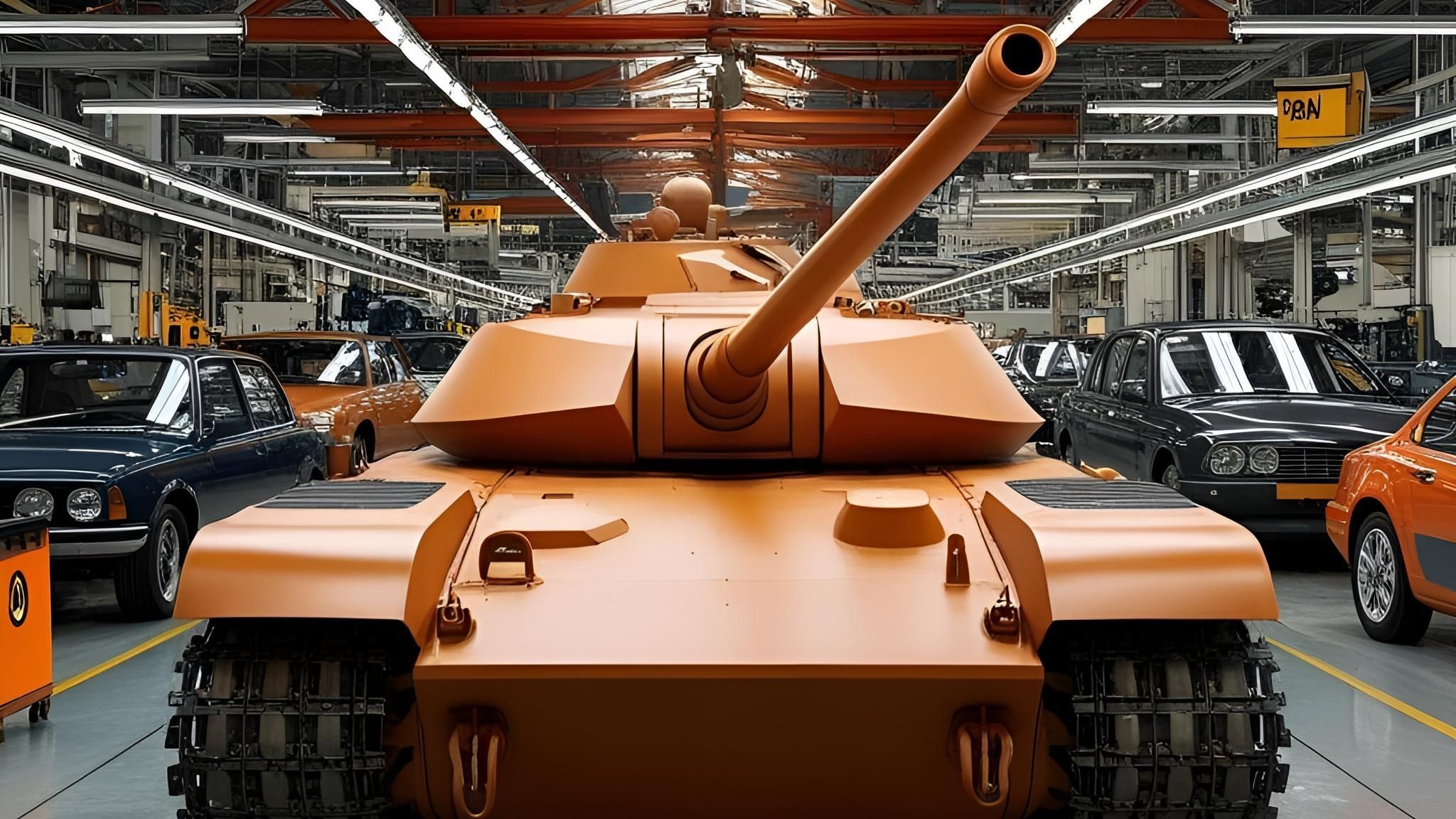
As Germany pivots its industrial might—particularly its auto sector—toward defence production in response to surging security demands and EU-led initiatives like “ReArm Europe,” the question arises: could the UK follow suit? Could British industries, particularly automotive and engineering, be mobilized for military production, and what challenges would we face?
Germany’s Shift: Auto Sector Turns to Defence
In Germany, defence leaders and the Federal Association of the German Security and Defence Industry (BDSV) are pushing for the country’s automotive industry to be repurposed to meet military production demands. With Europe seeking to reduce reliance on American arms, major players like Rheinmetall and Continental are retraining automotive workers for defence roles. Factories in Berlin and Neuss are already being converted from car parts to military equipment, and firms like Hensoldt and KNDS are recruiting talent from Bosch and other auto suppliers. The EU’s “ReArm Europe” initiative is injecting over €800 billion into defence projects, supporting this transformation. Despite opportunities, Germany faces challenges including slow security clearances and the need for government support to smooth worker transitions. Even the steel and machine-building sectors are being mobilized, marking a major industrial shift.
Industrial Capacity: A Mixed Bag
The UK’s industrial landscape is markedly different from Germany’s. While Germany boasts a massive automotive sector with global giants like Volkswagen, BMW, and Mercedes-Benz, the UK’s car manufacturing industry is smaller and more reliant on foreign ownership. Companies like Jaguar Land Rover (owned by India’s Tata Motors), Nissan UK, and BMW’s Mini have a strong presence but might not be as easily repurposed for defence contracts, especially given global supply chains and production mandates tied to civilian vehicles.
However, the UK has a robust aerospace and advanced engineering sector that could be more readily aligned with military production. Companies like Rolls-Royce (defence engines), BAE Systems (combat vehicles, naval and air systems), and QinetiQ (military R&D) already form the backbone of Britain’s defence industrial base.
Opportunities for Repurposing
Some potential repurposing avenues:
- Jaguar Land Rover could adapt certain facilities for military vehicle production (it has historic ties with the military through Land Rover).
- Rolls-Royce could expand beyond aerospace to ground vehicle propulsion systems.
- BAE Systems could partner with civilian manufacturers to expand output of armoured vehicles or drones.
- British Steel and machine tooling companies could shift toward defence-focused metal fabrication.
Challenges the UK Would Face
- Industrial Decline: The UK has undergone significant deindustrialization since the 1980s. Unlike Germany, which maintained a strong manufacturing base, the UK’s capacity for large-scale industrial repurposing is more limited.
- Skills Gap: Retraining workers from civilian sectors for defence roles would be challenging, especially given the shortages in engineering and skilled trades.
- Security Clearance Bottlenecks: Like Germany, the UK would face delays in vetting civilian workers for sensitive military production. Fast-tracking clearances would be necessary.
- Foreign Ownership Issues: Many UK industrial assets are foreign-owned, complicating their involvement in sensitive defence projects.
- Regulatory & Political Will: A strategic shift would require coordinated government action, incentives, and legislation to enable private firms to pivot toward military contracts.
What do you think could be done?
- Government-Led Industrial Strategy: Similar to Germany’s BDSV-led push, the UK government could create a defence repurposing task force under the Ministry of Defence and the Department for Business and Trade.
- Defence Investment Incentives: Tax breaks, subsidies, and R&D grants could encourage civilian firms to enter defence production.
- Public-Private Partnerships: Collaborations between the MOD and manufacturers could ease the transition and clarify long-term procurement needs.
- Workforce Transition Support: Apprenticeships, retraining schemes, and faster security vetting for workers entering defence roles.
While the UK lacks the scale of Germany’s automotive sector, there is room to repurpose parts of British industry for military production. It would require strategic planning, investment, and close coordination between government and industry. The stakes are high: enhancing sovereign defence capabilities and reducing reliance on imports, particularly from the US, is becoming a priority in an increasingly unstable global security environment.

Terry Murphy
Share


How can we help?
If you’d like to learn more about our divisions, don’t hesitate to ask…